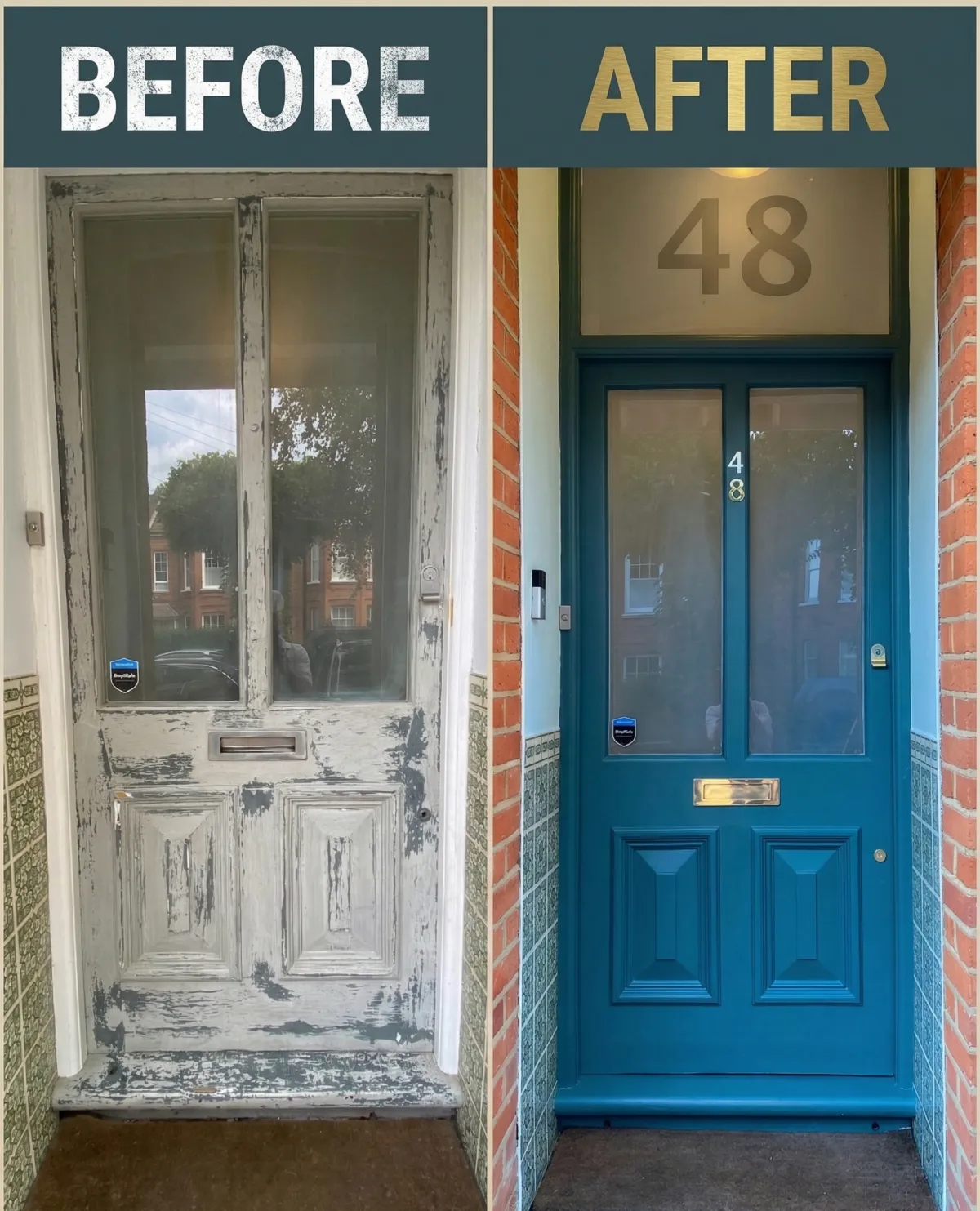
Victorian Front Door Restoration in Epsom: Why One Homeowner Chose Repair Over Replacement
There's something about a tired front door that can let a whole property down. The woodwork chalks over, the paint lifts and blisters, and what was once a handsome Victorian entrance starts to look like something that belongs on a skip. That's exactly the situation one Epsom homeowner found themselves in recently - and the decision they made saved them considerably more than they expected.
The Door Before Work Began
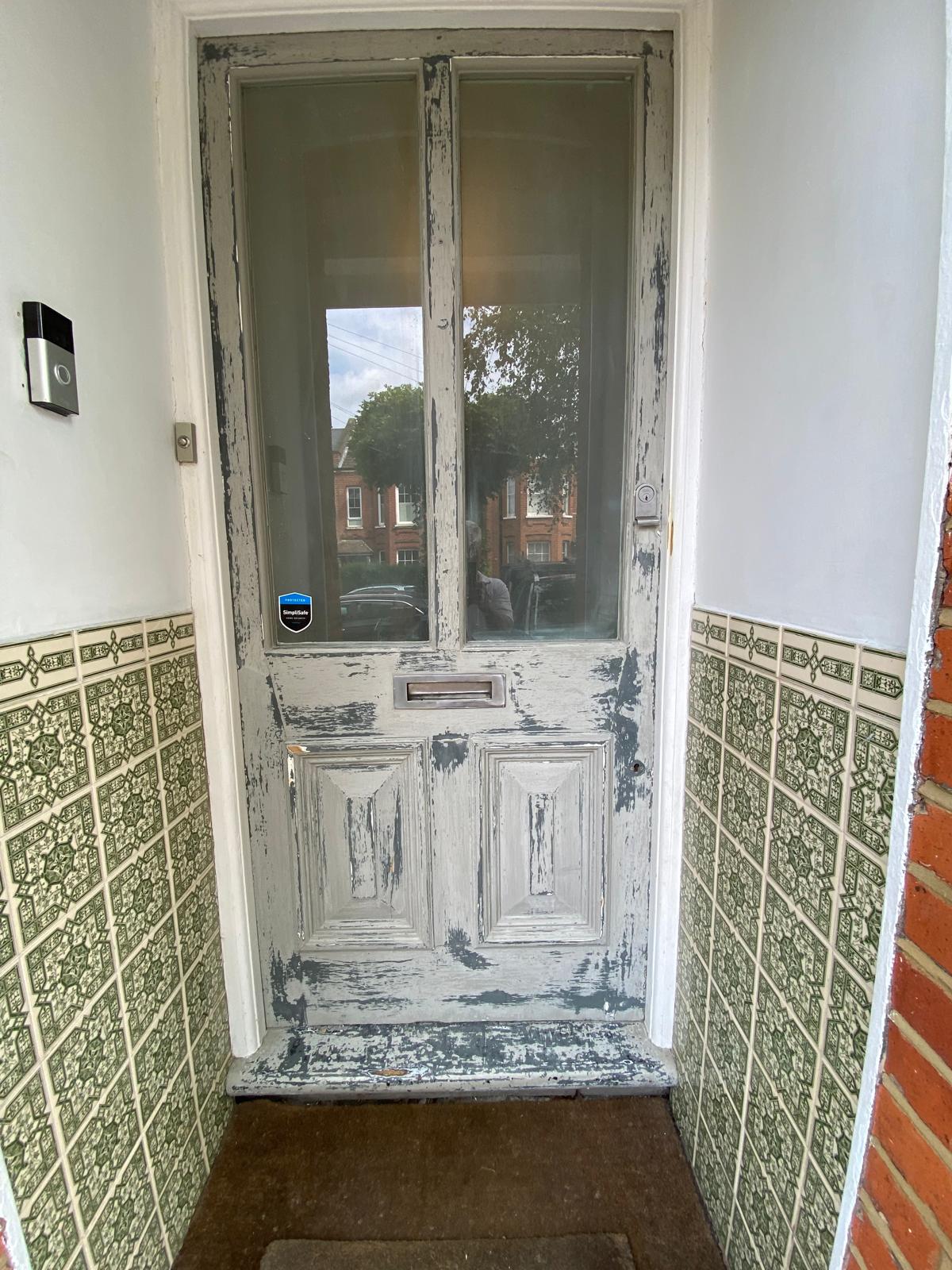
The before photos tell the story better than words can. Decades of paint had built up and then failed spectacularly - peeling back in thick, crumbling sheets right down to the bare timber. The glazing bars were rough, the panel edges were ragged, and the whole thing had developed that slightly forgotten look that's easy to ignore from inside but impossible to miss from the street.
The homeowner had been considering a full door replacement. New doors - particularly ones that match the scale and character of a period property - aren't cheap, and they don't always look right. Before committing to that route, they called Jonathan to get his opinion.
It's worth saying: Jonathan has seen enough front doors in this line of work to know when one is worth saving and when it isn't. This one was worth saving. The timber itself was sound. The problem was entirely surface-level - a proper restoration job, done right, would bring it back fully.
The Painting Restoration Process
This was a proper front door painting restoration job from start to finish - nothing was cut short.
Stripping and Surface Preparation
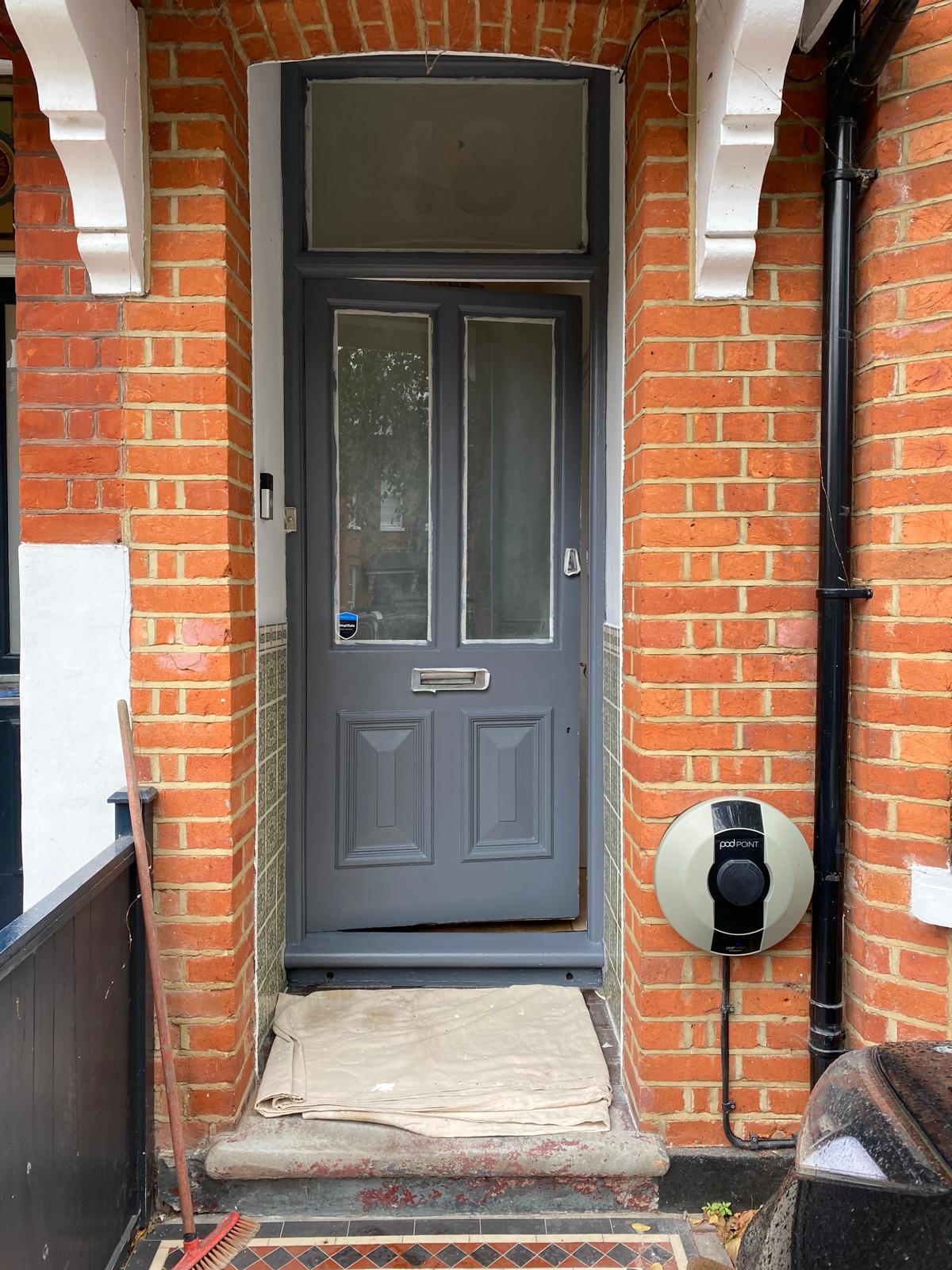
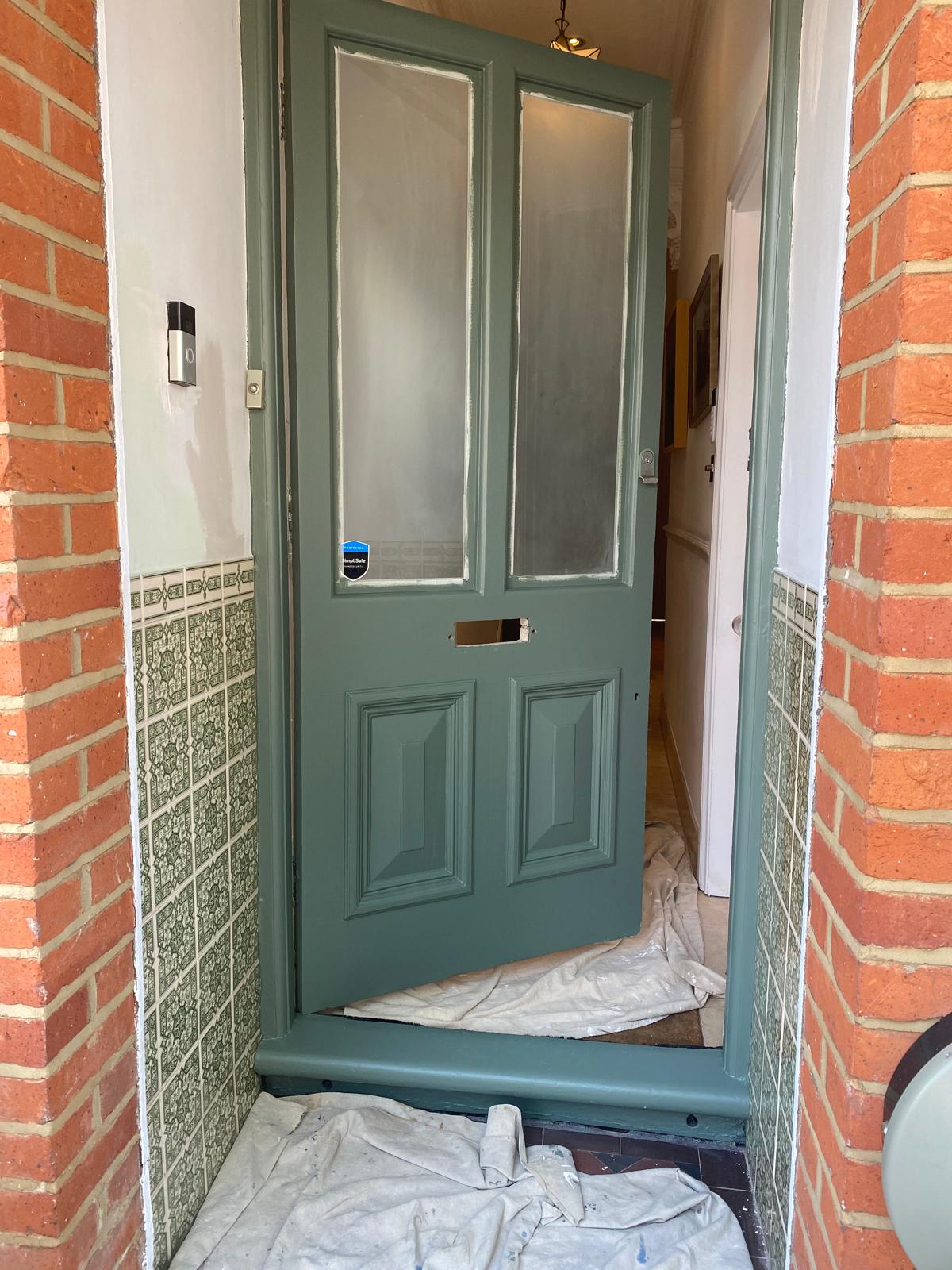
Every layer of failing paint was stripped back first. There's no point laying fresh material over surfaces that have already given up - it buys you maybe a season before the problem returns. The door was taken right back, panel by panel, until the timber was clean and stable.
Any areas where the wood had degraded slightly were addressed with appropriate filler and primer before anything else went on. Getting this stage right is what separates a finish that lasts five years from one that starts lifting within twelve months.
Professional Masking
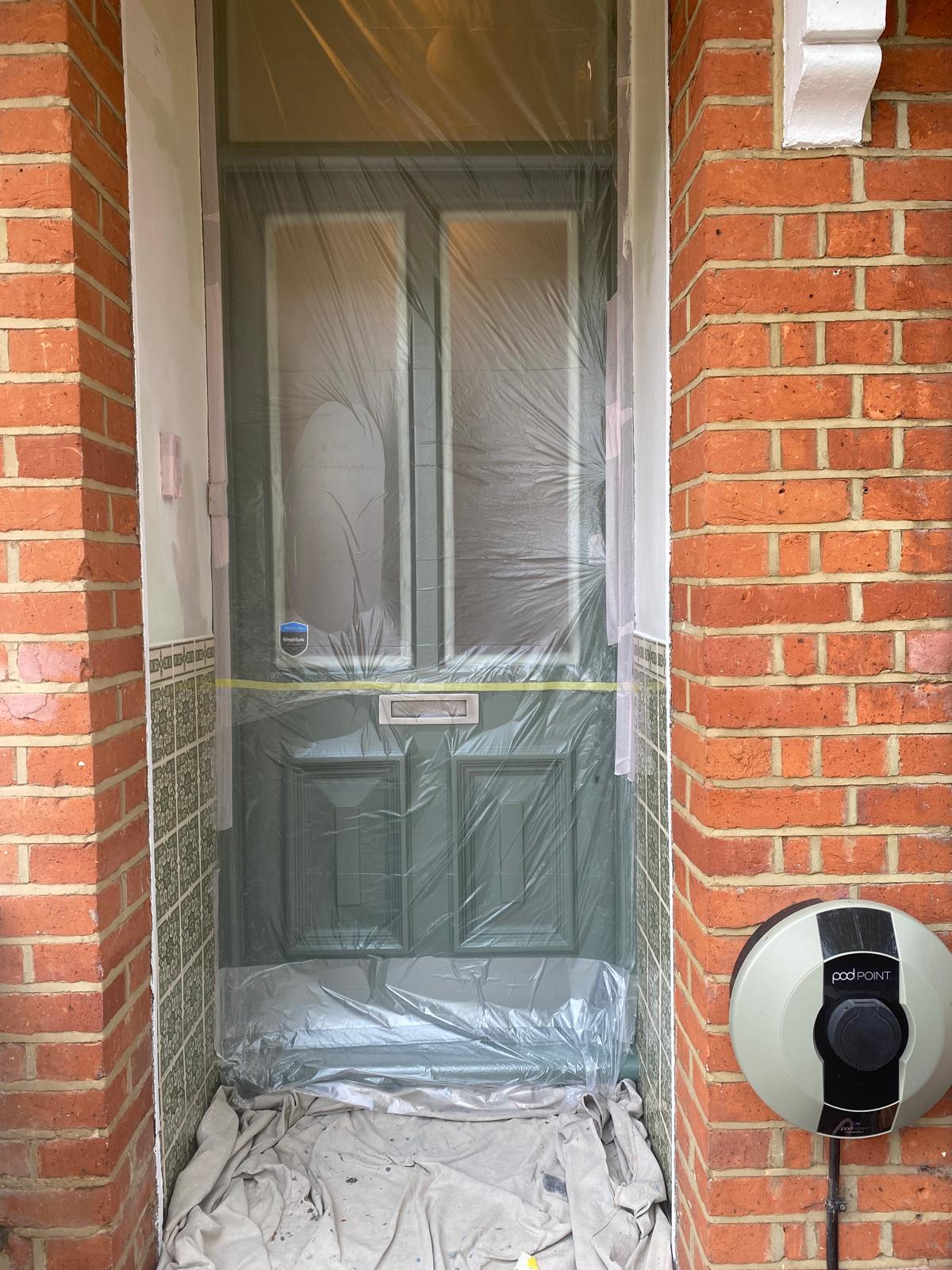
The glazing panels, the letterbox, and the surrounding brickwork were all masked carefully before a drop of paint touched the door. The porch tiles - original Victorian encaustic, the kind you genuinely can't replace like-for-like - were protected throughout. This is the sort of detail that matters when you're working on a period property.
The Finish
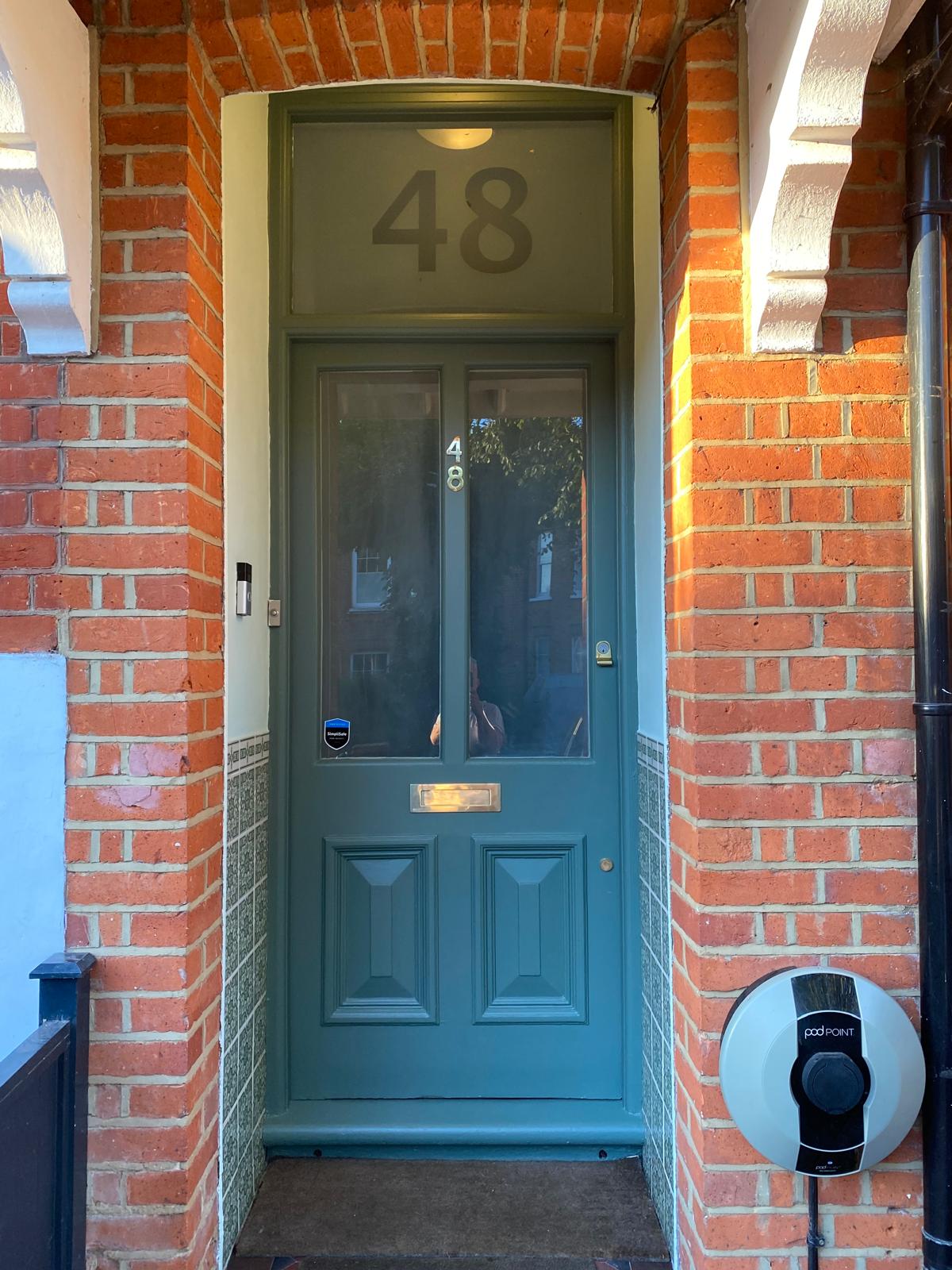
The door was painted in Dulux, in a deep heritage green - a rich, blue-toned shade that sits somewhere between traditional duck egg and slate, with real depth to it in direct sunlight. It's the kind of colour that looks almost bespoke on a red-brick Victorian terrace, and it photographs beautifully. The frame was taken to a clean white, which sets the green off perfectly.
The result is a door that looks, frankly, better than a replacement would have done. New doors rarely have the same weight and detail as original Victorian joinery. Preserving what's already there - and finishing it properly - is nearly always the better outcome if the timber allows it.
If your front door or exterior woodwork is looking tired and you're not sure whether it needs a full repaint, a restoration job, or something else entirely, it's worth getting a proper opinion before spending money on the wrong solution. Take a look at the painting and decorating services page and get in touch to talk to Jonathan!
Why Restoration Often Makes More Sense Than Replacement
The conversation Jonathan had with this particular client is one that comes up fairly regularly. A new front door for a period property - one that's the right size, has the right glazing configuration, and doesn't look cheap against original brickwork - can run to several hundred pounds before fitting is even considered. And fitting an oversized Victorian door opening isn't always straightforward.
A thorough paint restoration, done with the right prep and quality materials, extends the life of the existing door significantly. It also keeps the original character intact - the weight of the panels, the moulding profiles, the proportions that were built to suit the house. That matters on a period street.
There's also a practical argument: if the door is fundamentally sound, stripping and repainting it is almost always quicker, less disruptive, and less expensive than a full replacement.
What This Job Demonstrates
This is a good example of the kind of work Jonathan takes on regularly across Epsom and the surrounding area. It's not a huge project by any measure - no scaffolding, no major structural work. But it's the sort of job that requires proper care, a methodical approach, and experience with period properties and exterior timber.
The difference between a front door done properly and one done in a hurry shows within months. The preparation is everything.
If you're based in Epsom or Ewell and your front door is in a similar state - or if you've got exterior woodwork, soffits, or fascias that need attention before the weather gets into them - get in touch with Jonathan for a quote by submitting an enquiry via the website! (Click me) He works across Epsom, Ewell, Ashtead, and the wider KT17 and KT18 areas.
